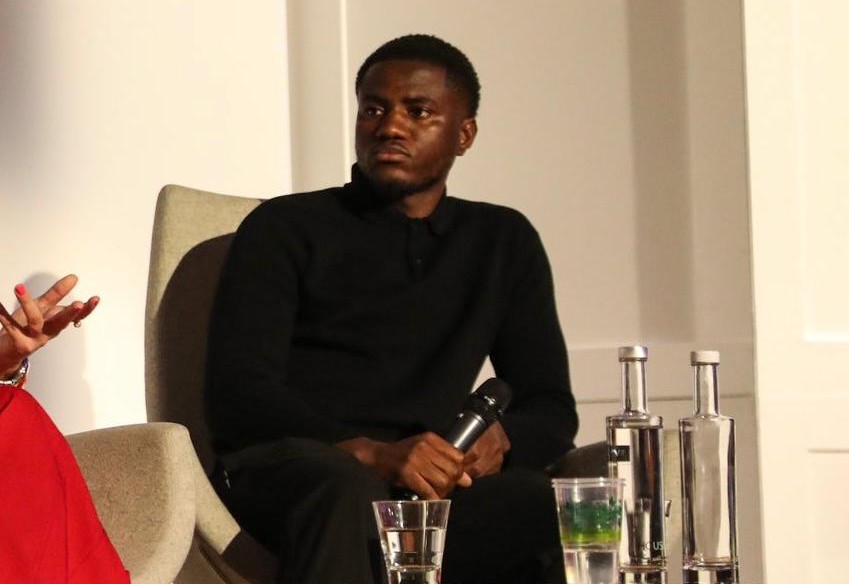
African football’s diaspora is highly visible. It appears across elite leagues, lower divisions, coaching staffs, backroom roles, media, and business throughout the global game. Yet despite this visibility, African football systems remain fragile. Pathways are narrow. Institutions are uneven. Too many young people are still sold a single, unforgiving story: make it as a professional player, or fail.
The problem is not a lack of talent, ambition, or goodwill. It is a lack of structure.
That is why diaspora participation matters — not as charity or symbolism, but as systems-level engagement.
Seeing the System Early
Early in his career, Beryly Lubala understood that football depends on more than talent alone. It functions on structure.
Playing within the English football system exposed him to the whole ecosystem that sustains clubs: boards that set strategy, executives who manage risk, administrators who ensure compliance, medical teams who protect assets, and groundskeepers who maintain the conditions for performance. These roles are not peripheral. They are foundational. Without them, clubs cannot access funding, meet regulatory standards, or operate sustainably.
As Beryly explains:
“When you’re inside a club, you quickly realise how many people it actually takes to make things work, from the board right down to the groundsmen. Those structures aren’t optional. Without them, we can’t operate at the highest level.”
That early exposure shaped how he came to see football, not merely as a pathway to play, but as an economy governed by systems. Performance, he learned, is downstream from governance, organisation, and infrastructure.
The Narrow Story We Tell Young People
One of the most damaging consequences of weak systems is the narrow way football is presented to young people, particularly in Africa. The dominant narrative remains almost entirely focused on becoming a professional player.
In reality, football sustains employment across coaching, performance analysis, medicine, administration, media, logistics, education, and governance. Yet without intentional education about how the football economy works, these pathways remain invisible.
Mr Lubala is direct about the gap:
“We focus almost entirely on playing, but very little on educating young people about how the football economy actually functions. There are many opportunities beyond playing, but if you’re not exposed to them early, you don’t even know they exist.”
Football participation alone is not enough. Without systems that link participation to education, skills development, and employability, opportunity is wasted. Millions engage with the game, but only a fraction benefit meaningfully from it.
Thinking Long-Term While Still Playing
Unlike many players who postpone long-term thinking until retirement approaches, Beryly began planning early. At 21 or 22, he started earning his coaching badges, not as a signal of his exit from playing, but as part of a broader strategy to remain relevant and impactful in football beyond his playing years.

His exposure to leadership at clubs such as Blackpool FC, alongside insight into governance and advisory roles operating behind the scenes, reinforced a simple but powerful lesson: influence off the pitch is cumulative.
“Starting early gives you an advantage,” he reflects. “While you’re still playing, your networks are strong, and your personal brand carries weight. Most players wait until they’re about to retire — by then, a lot of that leverage is gone.”
This early, intentional approach did not distract from performance. It enhanced it. Structured engagement off the pitch brought discipline, focus, and purpose to periods that can otherwise be destabilising for professional players.
BL Ballers: Formalising Opportunity
BL Ballers emerged from a simple but revealing observation. During the off-season, professionals and non-professionals would come together informally to play, and on the pitch, the differences were often marginal.
The real gap was not talent. It was access.
BL Ballers became a way to formalise opportunity: a platform designed to give non-professionals exposure, challenge, and connection rather than leaving them excluded from formal pathways. Over time, the initiative expanded beyond tournaments into conferencing and media, creating intentional spaces for dialogue about careers, pathways, and the wider football economy.

Importantly, this off-field work was not symbolic. It reflected a deeper instinct: football environments can be designed to do more than stage matches. They can convene people, share knowledge, and open doors.
From Giving Back to Investing in Systems
Mr Lubala’s approach to the continent today is deliberate and phased.
In the short term, he is focused on collaborating with credible platforms that align with his values, including the Football Foundation for Africa, to reconnect meaningfully with Africa while building expertise in ecosystem-level work. He points to FFA’s partnership with ISDE, which has enabled African students to access scholarships through the Africa Football Business Summit, as a tangible example of how football can be linked to education outcomes.
At the same time, he is clear-eyed: visibility alone is not enough. Impact must be measurable, grounded, and experienced on the ground.
In the medium to long term, his ambitions are structural: establishing entities on the continent and ultimately building campuses focused on education. These are not gestures. They are infrastructure investments designed to translate football participation into long-term opportunity.
This framing marks a clear departure from the familiar language of “giving back.” It positions the diaspora not as a charity arm of African football, but as a long-term investor class in the game — contributing capital, networks, credibility, and institutional knowledge to build systems that endure.
Why Diaspora Participation Is Strategic
The African football diaspora carries something rare: a lived experience of functioning systems. Governance frameworks, funding requirements, compliance standards, and career transition pathways are daily realities in mature football environments.
When that experience is engaged intentionally, it becomes a powerful resource.
Diaspora participation is therefore not about obligation or sentiment. It is about agency. It is about recognising that those who have navigated structured environments are uniquely positioned to help design them elsewhere — if credible entry points exist.
And importantly, Beryly is confident he will not be alone. Where platforms are serious and impact is real, others will follow.
Conclusion: Beyond Visibility
African football will not be transformed by isolated gestures or late-career philanthropy. It will change when those with access, experience, and leverage choose to engage early, intentionally, and structurally.
Diaspora participation is not a moral appeal. It is an opportunity. When that opportunity is anchored in systems rather than visibility, football can become what it promises to be for millions of young Africans: not just a dream of stardom, but a pathway to education, employment, and long-term opportunity.
 Back to Blog